Damn, Dorothea: Rereading Middlemarch, chapters 1-6
We’re reading Middlemarch again, seeing how our past opinions line up with new ones and how eight years of perspective have changed things for us! As we go, we’ll be recapping our chats of each section here on the blog; you can find all of our Middlemarch posts here.
This week, we talk insufferable women, innocuous men, and, across the George Eliot Extended Universe, who should bust out of their own book and maybe marry someone in another book entirely.
Kate: OK, first, I think what struck us both so far was that Dorothea is so much more insufferable than we remembered, right?
Corey: Right. I remembered her yearning and straining against a too-small society who couldn’t see that she wanted something More. Basically the human personification of a musical’s “I Want” song.
Kate: She’s just so painfully earnest and determined to hate everything, from puppies to jewelry to her sister. And so willing to judge other people! But also so super ready to ascribe all kinds of romantic ideals to Mr. Casaubon, who is a man made up entirely of waving red flags. Maybe not red, that seems too bright and interesting for Casaubon. Gray flags.
Corey: Absolute dishrags waving all over him! But to your point more broadly: Dorothea wants so much, including when it comes to Casaubon, but has so little context and information to inform what she wants and how she processes the world around her. When he hears of her engagement, the excellent baronet Sir James suggests that her uncle should have made her wait to get married until her majority because he, only a few years older, can see how much you learn and grow in those crucial years. (Is he entirely unbiased on not wanting her to marry that old mummy? No, but he can still be right that she should wait!)
(more…)February 28, 2024 at 9:13 am The Transgressors Leave a comment
2024 Long-(Re)Read: ‘Middlemarch’ by George Eliot
After two years of long-read good times (hey have you listened to White Whale yet?), we are excited to kick off 2024 with another long-read project. This time, we’re going back to an old favorite we haven’t read in almost a decade: George Eliot’s Middlemarch.
Last time we read Middlemarch, it was unintentionally at the same time and we had so many feelings we ended up taking a whole month to unpack them here.
This time, we made ourselves a little calendar and decided to kick things off by also re-reading Rebecca Mead’s excellent My Life in Middlemarch. Her book is all about how you change as a reader over the years, even as a text stays the same. Rereading something years later can be an entirely new experience — and, in the specific case of Middlemarch, a meaningful and enriching one.
We’ll be finishing off this long-read with a limited return to podcasting with Damn Dorothea, where we revisit the topics and questions we raised last time we read Middlemarch. Back in the first time we read it, our friend Sheryl pointed out how important perspective and age are to experiencing and understanding the book; we’re excited to come back ten-ish years later and see how we’ve changed as readers and how Middlemarch is different for us now.
Sound interesting? We’d love for you to read along with us! Click below to see our full calendar ↴
(more…)Our 2023 Year in Reading
Happy New Year, Literary Transgressors! It’s that magical time of year when we look back on our year of reading and discuss our favorites, our disappointments, and our pick for Book of the Year.
Share your favorite 2023 reads and recommendations for 2024 in the comments!
Best Recommendation
Kate: The Love Songs of W.E.B Du Bois by Honoree Fanonne Jeffers. I was going through a rough patch in reading and could really only get through Agatha Christie. This book was recommended to me at Thanksgiving, and when I expressed doubt about the length, the recommender said, “Read it on a Kindle and you won’t think about it.” He was right–I didn’t think about the length at any point while reading this beautiful, terrible family saga. Jeffers is a published poet, and it shows in her prose.
Corey: The Leavenworth Case by Anna Katherine Green was recommended to me by as “the first proper detective story.” Written by a woman and featuring courtroom drama filled with both gasps and legal accuracy, The Leavenworth Case turned out to be one of this early genre reads where it feels hackneyed because literally everyone would use the same ideas and forms as the genre grew. This book is filled with Victorian histrionics, a genius detective, his trusty everyman sidekick just trying to keep up, and numerous red herrings–and all written nine years before Arthur Conan Doyle would publish his first Sherlock Holmes story.
(more…)January 2, 2024 at 3:51 pm The Transgressors Leave a comment
‘White Mughals’ by William Dalrymple

Subscribe to continue reading
Subscribe to get access to the rest of this post and other subscriber-only content.
Classics Challenge Read Along: ‘Daniel Deronda’ by George Eliot
Those of you who have followed this blog for many years might be familiar with our old Classics Challenge feature. In its original form, the Classics Challenge blasted through a work of classic literature every week, roughly approximating the chaotic energy of an undergrad pulling an all-nighter before finals.
While it was a fun way to read a bunch of books we felt like we missed out on in school, the old Classics Challenge also lacked space to luxuriate in what we were reading. Indeed, we struggle to remember most of the books we read for the Challenge because of its breathless pace.
So we decided to have our cake and eat it too by combining the best of the Classics Challenge with the best parts of our White Whale long-read project: namely, tackling a dense work of classic literature over the course of months with a buddy.
And we’d love for you to read along with us!
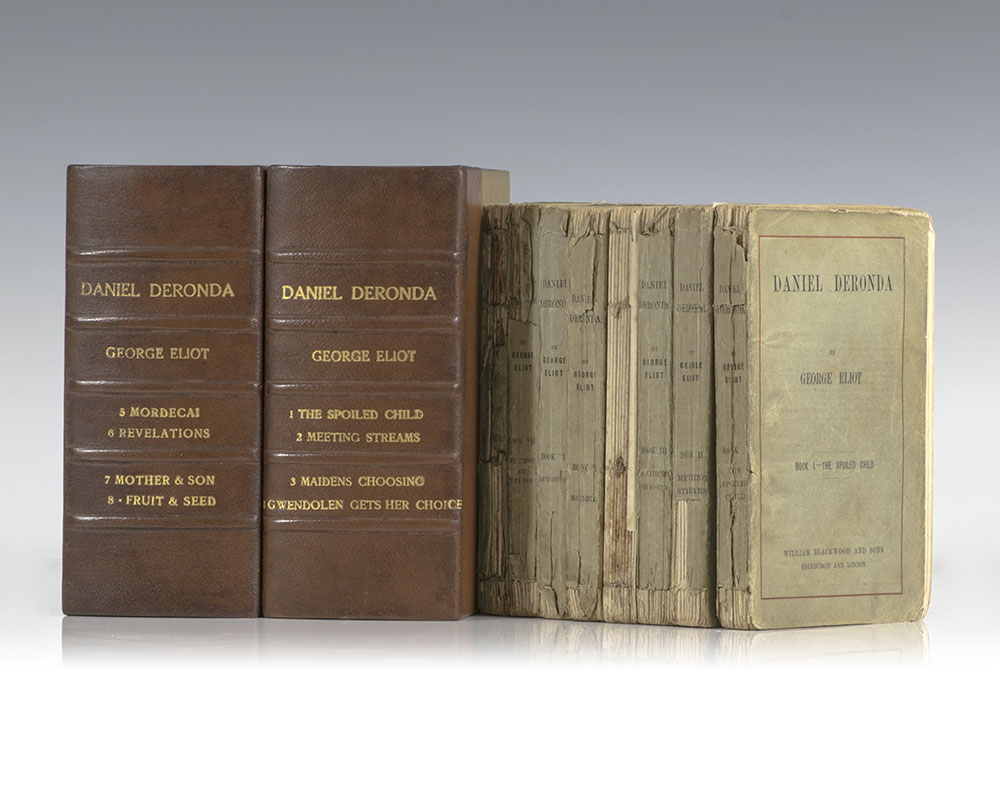
Starting this April, we dive into George Eliot’s Daniel Deronda. We admittedly know very little about the book going in other than: a) it is George Eliot’s final novel and b) it is her ‘Jewish novel.’
With the recent rise in antisemitism, it was especially important to us to choose a book that explores themes of Jewish identity and otherness. Tales of Jewish history are often understandably fixated on devastating tragedies, but this can be to the detriment of stories focused on more quotidian exclusion and discrimination experienced by Jews across time and place. We are eager to see how Eliot, an author we both love but read all too infrequently, tangles with this thorny web.
Daniel Deronda is broken into eight ‘books’ or sections. Our plan is to read one of these books/sections every two weeks, wrapping up in mid-July (click Read More below to view the full schedule).
Much like our Ides of Middlemarch series, we expect to have a lot of feelings about this multifaceted masterpiece, so stay tuned for future posts and we hope to see you in the comments!
(more…)April 18, 2023 at 11:43 am The Transgressors Leave a comment
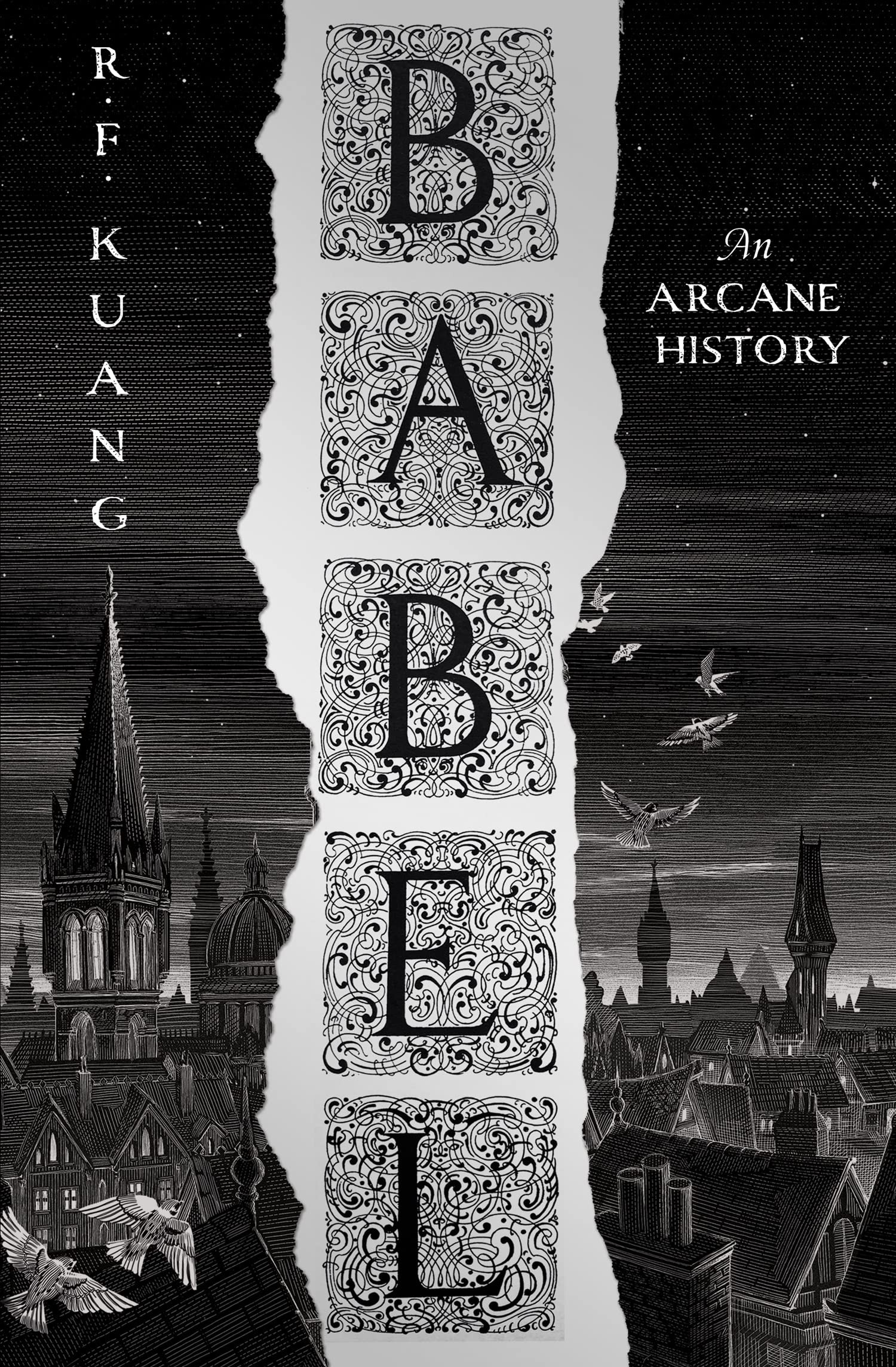
Babel, or the Necessity of Violence: An Arcane History of the Oxford Translators’ Revolution by R.F. Kuang
This book is a masterpiece, and I couldn’t finish it.
Why am I talking about it? Here’s a partial answer: about halfway through this story, the only white woman in a group of close friends begins to cry as she realizes how complicit she’s been in the ways the institutions she loves have made life ugly for the people she cares most about. Robin, our main character, says it’s ironic that somehow the most privileged character, the one least wronged, is the one who demands to be comforted.
That’s a sentiment we hear over and over when people of color are murdered and white people seem to suddenly realize our part in systemic racism. There’s no absolution for our complicity, and we cannot, should not, demand more emotional labor from the people we’ve oppressed.
In R.F. Kuang’s fictional early-Victorian London, the revolution of the title centers on students who are ripped from their homelands and used by the British Empire to wage war on their countries of origin. In fiction as in life, it’s absurd for white people to demand comfort even as they are the reason people of color must fight for survival.
Babel starts with Robin Swift being taken from his home in Canton by a gentleman named Richard Lovell. Professor Lovell is clearly Robin’s father, though he refuses to acknowledge it and insists Robin is only his ward–probably because Robin’s mother was, in fact, Cantonese. Robin grows up in England, and eventually goes to Oxford to study at Babel, the only college at the university that accepts foreign students. Not because it’s a bastion of equity and inclusion, but because they need the students’ language skills to accomplish the magic that enriches the British empire. When Robin stumbles on a young man who looks exactly like him, he’s plunged into an underworld rebellion determined to use that same magic to destroy the empire for good.
(more…)Our 2022 Year in Reading
A note from the editor: Our apologies for not getting this up before, you know, 2023. So long as it’s still January, it’s fine, right?
—KW
Corey: It’s been a weird year for me and reading! For whatever reason, I read so many books this year that I appreciated, but didn’t necessarily love. I guess I stumbled into a lot of books where the author was Trying Something. As a reader, I found myself more often appreciating their craft and choices than I was actually enjoying what I was reading. Most I’m not even sure I’d recommend. I’ll note where this is the case and I’ll try to remember books I did actually like to recommend on this list, but apologies in advance for sparseness. And needless to say I’m looking forward to your awardees, Kate, so I can get back to reading things I love in 2023!
Kate: HA, is there anything more exhausting than a writer Trying Something when you’re looking for a straightforward escape? I think that’s why I gravitated to romance and mystery this year—it seems like I can’t bear to read anything depressing right now.
(more…)White Whale Episode 19: It Tolls for Thee

It all comes to an end this week on our final episode of White Whale! What does Molly really think of Bloom? Will Ahab slay Moby Dick? And what was James Joyce doing this whole time? These answers plus a lot of staggering around in shock that it’s all over on this week’s super-sized episode of White Whale.
White Whale is our latest long-read project, now in audio form for your enjoyment! Each episode, we tackle chunks of two “white whale” reads: Ulysses by James Joyce and Moby Dick by Herman Melville, aka: books that we have avoided reading because they are so dense and difficult.
Click here to listen to Episode 19: It Tolls for Thee on Audiomack.
December 20, 2022 at 8:11 am The Transgressors Leave a comment
White Whale Episode 18: Man in Motion
This week on White Whale, join Corey and Kate as they experience Herman Melville continuing his own vengeance quest to make us all realize just how mad Ahab is while James Joyce brings back the perennial favorite, potted meat!
White Whale is our latest long-read project, now in audio form for your enjoyment! Each episode, we tackle chunks of two “white whale” reads: Ulysses by James Joyce and Moby Dick by Herman Melville, aka: books that we have avoided reading because they are so dense and difficult.
Click here to listen to Episode 18: Man in Motion on Audiomack.
White Whale Episode 17: Sailors & Sailors
This week, we have sailors in both Ulysses and Moby Dick — what are the odds?! Join us for an unusually cogent section from James Joyce and an unusually all-over-the-place chunk of chapters from Herman Melville. What is it, Freaky Friday over here?
White Whale is our latest long-read project, now in audio form for your enjoyment! Each episode, we tackle chunks of two “white whale” reads: Ulysses by James Joyce and Moby Dick by Herman Melville, aka: books that we have avoided reading because they are so dense and difficult.
Click here to listen to Episode 17: Sailors & Sailors on Audiomack.
November 22, 2022 at 9:08 am The Transgressors Leave a comment


 Literary Transgressions